



Beyond the Yellow Stain: The Realities of Sourcing Tetrahydrocurcumin 98% Powder
Let me be completely blunt. If you are trying to formulate a premium skin-brightening serum and your R&D team is still messing around with raw 95% curcuminoids, you are setting your lab up for failure. I've spent the better part of a decade watching cosmetic chemists pull their hair out because their turmeric active permanently stained the mixing tanks, the packaging, and ultimately, the customer's face. The fix is Tetrahydrocurcumin (THC)—but only if you know how to buy it right.
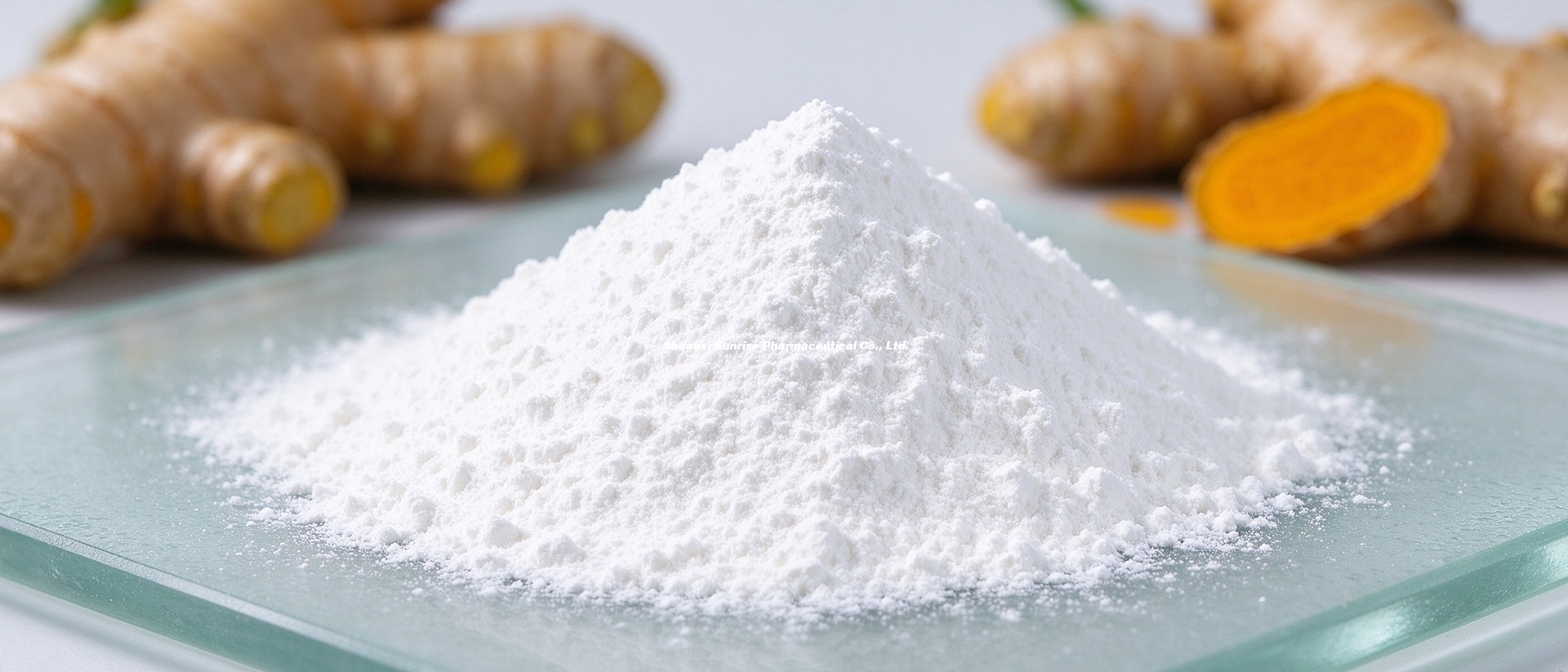
I get emails every week from contract manufacturers who thought they scored a great deal on "white curcumin" from a broker, only to find out their latest batch of face cream turned pale beige after three weeks on the shelf. That happens because they bought a poorly synthesized, partially hydrogenated knockoff instead of genuine, HPLC-verified Tetrahydrocurcumin 98% Powder.
Today, I'm taking you off the marketing brochure and onto the factory floor. We are going to look at the actual biochemistry of what makes THC work, why it hates water, and exactly what red flags to look for on a supplier's Certificate of Analysis.
1. What Actually Happens Inside the Reaction Kettle?
To understand why you pay a premium for Tetrahydrocurcumin over standard Curcuma longa extract, you have to look at the catalytic hydrogenation process. We aren't just "bleaching" turmeric powder; we are fundamentally rewiring the molecule.
Killing the Yellow Chromophore
Standard curcumin has a conjugated diene system—a specific arrangement of double bonds that absorbs light and screams "bright yellow." By pumping hydrogen gas into the reactor under pressure with a palladium catalyst, we break those specific double bonds. The result? A molecule that keeps its powerful phenolic groups but loses its color entirely.
The Stability Upgrade
Breaking those double bonds does a massive favor for your stability testing. Standard curcumin degrades quickly when exposed to heat and oxygen in an emulsion. Tetrahydrocurcumin is significantly more stable, meaning your final product won't lose its antioxidant punch while sitting in a warehouse.
2. Reading the Spec Sheet Like a Chemist
When you pull our COA for Tetrahydrocurcumin 98%, you are looking at a pharmaceutical-grade cosmetic active. Here is how I teach procurement teams to read the specs without getting ripped off.
| Analytical Parameter | The Factory-Floor Translation |
|---|---|
| Assay (Purity) | ≥ 98.0% (HPLC). This ensures the reaction actually finished. If a supplier uses UV testing instead of HPLC, they are usually hiding unreacted yellow curcumin in the batch. |
| Visual Appearance | White to off-white crystalline powder. A distinct yellow tint is an immediate rejection. It means the hydrogenation failed and the powder will eventually stain your emulsion base. |
| Solubility Profile | Strictly Lipophilic (Oil-Soluble). It is basically waterproof. If you try to dump this straight into a water-based toner without a heavy solubilizer, you will get a gritty, floating mess. |
⚠️ Formulation Hack: Getting it to Dissolve
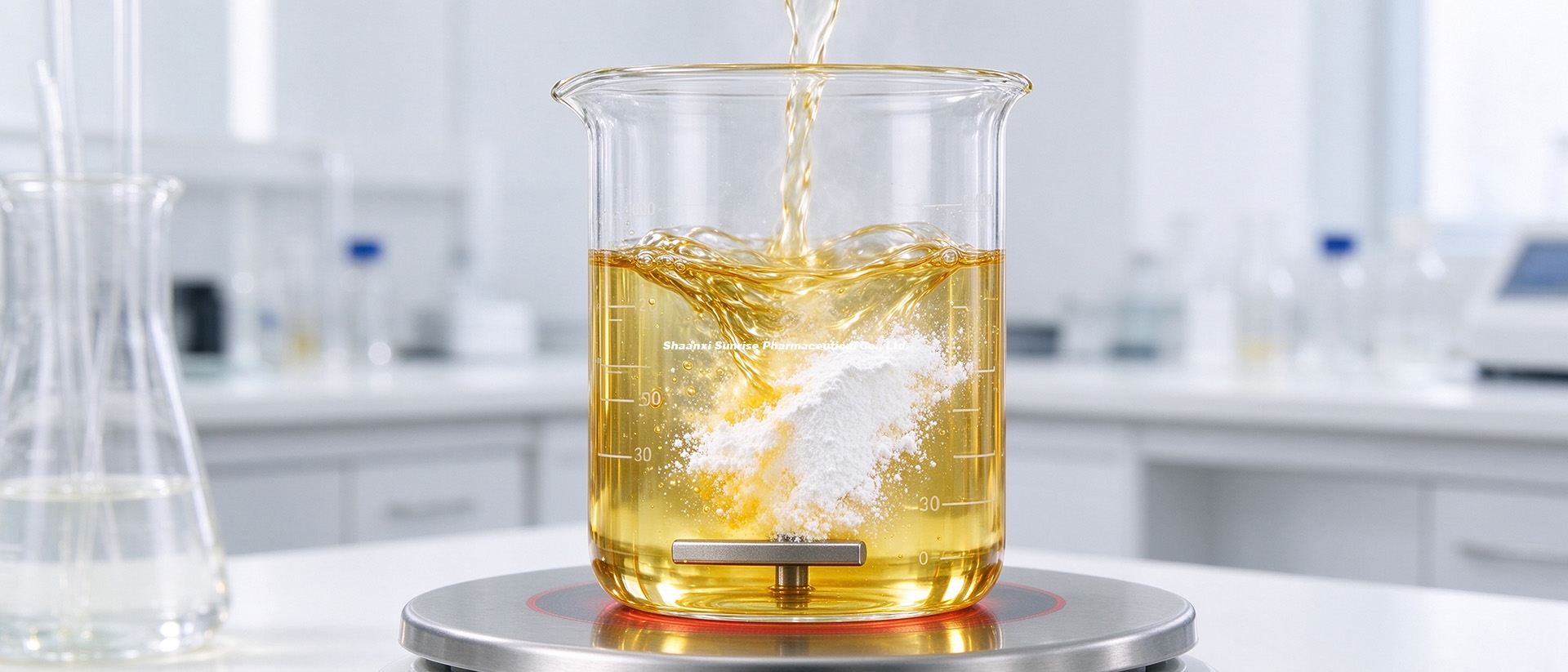
I cannot stress this enough: Tetrahydrocurcumin hates water. I've had panicked formulators call me saying the powder feels "sandy" in their serum. Nine times out of ten, they skipped the solvent phase. You need to pre-dissolve THC in Ethoxydiglycol, Dimethyl Isosorbide (DMI), or Propanediol, or melt it directly into your heated lipid phase (around 80°C) before you even think about emulsifying. Treat it like a stubborn wax, and it will blend beautifully.
3. Why Brands Pay the Premium (The Bioactivity)
If it was just about removing the color, companies wouldn't pay the synthesis markup. They buy it because THC actually outperforms raw turmeric in clinical mechanisms, particularly in high-end dermatology.
Crushing Tyrosinase: If you are making a skin-brightening product, tyrosinase is your enemy—it's the enzyme that kicks off melanin production. In vitro data shows that THC inhibits tyrosinase significantly better than standard Kojic Acid or Arbutin. It stops hyperpigmentation before it starts.
Scavenging ROS: It is a brutal free-radical scavenger. When UV light hits the skin, it creates Reactive Oxygen Species (ROS) that chew up collagen. THC neutralizes these radicals and prevents lipid peroxidation, keeping the cellular membrane intact.
4. How to Audit a Supplier Without Getting Fooled
Because adding hydrogen to a molecule involves heavy industrial solvents and expensive metal catalysts, there is a lot of garbage material on the market. If a supplier gets defensive when you ask these four questions, find a new factory.
Show Me the Residual Catalyst Test
We use palladium to catalyze the hydrogenation. If the factory doesn't properly filter and wash the final crystal, heavy metals end up in your powder. Your COA must explicitly show heavy metals are stripped well below strict safety thresholds.
What is the Color Variance (ΔE)?
If a 25kg drum arrives looking like pale sand instead of snow white, the reaction was rushed to save money. That residual yellow will eventually bleed into your lotion. Demand a strict color standard.
Prove the HPLC Specs
I've seen traders fake 98% purity claims by using outdated titration or UV methods that can't tell the difference between raw curcumin and hydrogenated THC. If the word "HPLC" isn't on the testing sheet, the document is worthless.
Let's Talk Vacuum Packaging
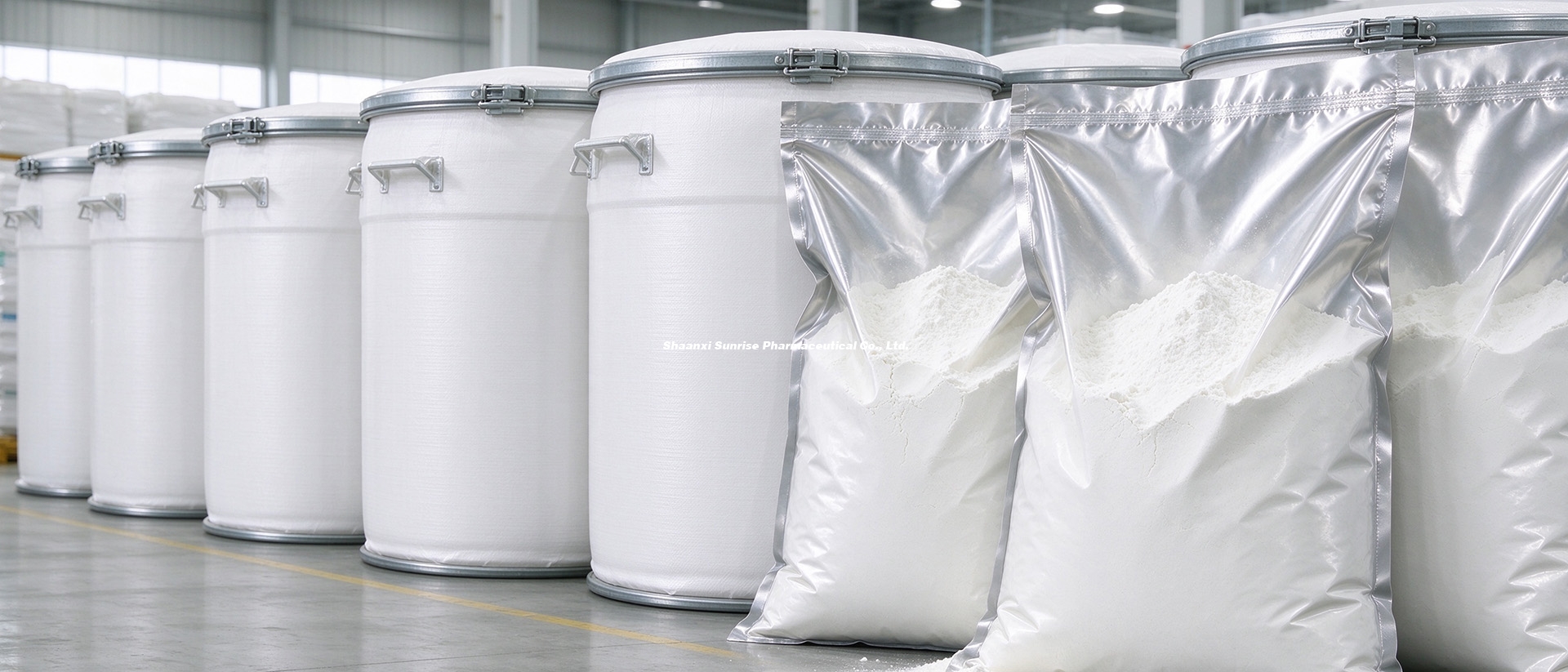
Even though THC is more stable than raw turmeric, it still hates sitting in humid, hot warehouses. A real manufacturer packs this in thick, double-layer antistatic bags, pulls a vacuum, and seals it inside a rigid fiber drum. If they ship it to you in a flimsy ziplock, they don't respect the chemistry.
Frequently Asked Questions from the Formulation Bench
Does Tetrahydrocurcumin 98% stain skin or clothing?
No. That is literally the entire point of the hydrogenation process. By breaking the conjugated double bonds, we remove the yellow pigment entirely. It is a white powder that will not stain your mixing equipment or your customer's face.
Can I just dissolve this in water for a face mist?
Absolutely not. It is highly lipophilic (fat-soluble). If you drop it in water, it will just float there. You must use a solubilizer like PEG-40 Hydrogenated Castor Oil, polysorbates, or dissolve it in a glycol first.
Is this ingredient suitable for both cosmetics and dietary supplements?
Yes. While my cosmetic clients buy it by the ton for brightening serums (due to the tyrosinase inhibition), the supplement guys use it because the body actually converts raw turmeric into THC anyway. Supplementing directly with THC bypasses some metabolic hurdles.
What is the normal dosage range for a skin cream?
You don't need much. Because of the 98% purity, clinical efficacy for skin brightening and antioxidant protection usually hits the sweet spot between 0.1% and 1.0% by weight.
Do you guys sell finished retail serums?
No, we stay out of the retail game. We are an upstream B2B factory. We synthesize the bulk 98% active powder and ship it in drums to brands and contract manufacturers.
Ready to Stop Staining Your Equipment?
If you are tired of dealing with inferior, yellowish "white curcumin," it's time to upgrade your raw material. Review the exact biochemical specifications on our product page, or contact our procurement desk directly for HPLC reports and samples.
View Product Specs & Request Sample